
Kitchens That Close Without Gaps
Cabinets in Arden for mountain homes with floor settling and alignment challenges
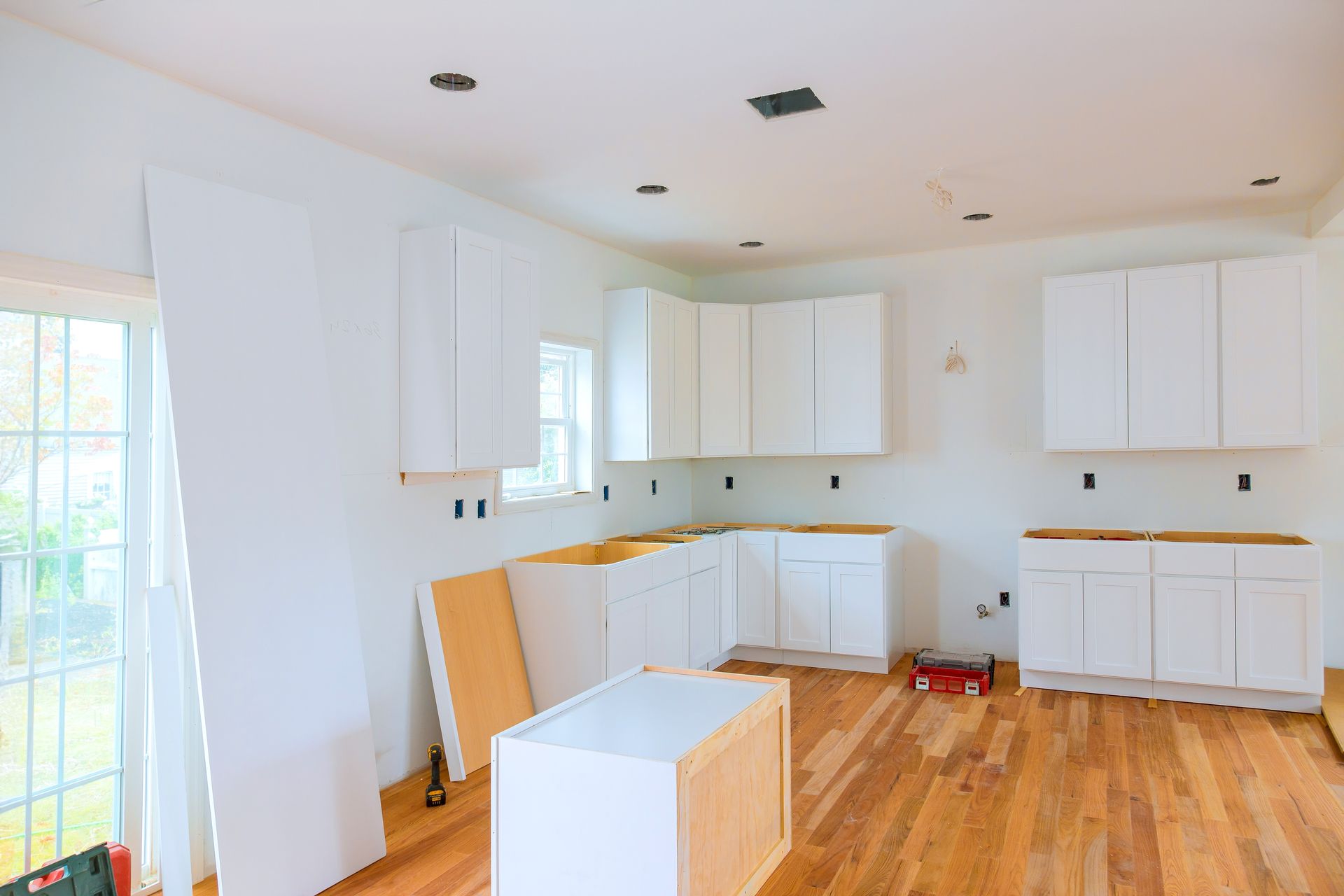
Cabinet doors that won't close evenly, countertops that tilt, and gaps between cabinet runs all trace back to floors that aren't level—a common issue in mountain homes where settling shifts foundation planes over decades. Handyman Service Arden installs and repairs cabinets using individual unit leveling or run shimming based on actual floor conditions found on site, compensating for variations that range from minor slope to pronounced dips across a kitchen span. The technique adapts to what's really there rather than assuming flat floors, drawing on 50 years of residential cabinet work where floor perfection is the exception, not the rule.
Cabinet installation begins with measuring the floor plane across the intended cabinet run—a four-foot level or laser shows whether you're dealing with consistent slope, isolated low spots, or wave patterns from joist deflection. Individual leveling means shimming each cabinet independently to achieve plumb and level, then scribing filler strips to close gaps between units. Run shimming builds a level base across multiple cabinets simultaneously, useful when the floor slopes uniformly in one direction. Both methods produce cabinets that sit stable, with doors that align properly and countertops that don't drain water to one side.
Schedule a kitchen assessment to measure your floor variation and discuss installation or repair options.
Why Floor Compensation Matters for Cabinet Work
Installing cabinets on uneven floors without compensation creates alignment problems immediately visible once doors get hung—adjacent doors won't meet evenly, drawer faces tilt, and countertop seams telegraph every floor irregularity. Shimming lifts low corners or entire cabinet sides until the unit reads level in both directions, using tapered shims stacked to the necessary height and secured so they don't shift. Arden homes built on hillside lots or older foundations frequently have floors that drop an inch or more across a 10-foot kitchen run, requiring systematic leveling of each base cabinet before securing it to wall studs.
After installation, cabinet doors and drawers operate smoothly without binding or swinging open on their own, and countertops sit level so liquids don't pool at one end. Upper cabinets align horizontally even when floors below are out of plane, because installation references level marks on the wall rather than floor position. The finished kitchen looks professionally aligned, with consistent reveals between doors and uniform countertop planes, because the installation compensated for structural realities instead of ignoring them.
The service includes cabinet installation with floor compensation, shim placement, attachment to wall framing, and door adjustment. It does not include countertop fabrication or installation, plumbing disconnection and reconnection, or structural floor repairs. Cabinet selection affects installation complexity—frameless European-style units require more precise leveling than traditional face-frame cabinets that tolerate minor variation.
What Property Owners Usually Ask
Cabinet installation and repair questions typically focus on floor challenges and alignment techniques for mountain home conditions.
How do you level cabinets on floors that slope?
Tapered wood or plastic shims go under the cabinet base at low points, stacking as needed to bring the unit level—a torpedo level on the cabinet top confirms both front-to-back and side-to-side plane. Once level, the cabinet gets secured to wall studs, and shims stay in place permanently, trimmed flush with a utility knife.
What causes cabinet doors to stop closing properly over time?
Foundation settling shifts the cabinet box out of plumb, changing door alignment so gravity no longer holds them closed or causes them to swing open. In Arden, seasonal ground movement from freeze-thaw cycles can produce gradual shifts that affect cabinet level even after initial installation was correct.
When should you shim individual cabinets versus building a level run?
Individual shimming works when floor variation is irregular—low spots scattered across the room without a consistent slope pattern. Run shimming suits floors that tilt uniformly in one direction, letting you build a level platform for multiple cabinets simultaneously rather than adjusting each one separately.
How long does typical cabinet installation take?
A standard 10-foot kitchen run with base and upper cabinets generally requires one to two days, depending on floor variation and how many cabinets need assembly. Pre-assembled cabinets install faster than flat-pack units, but shimming and leveling time remains consistent regardless of cabinet construction style.
What should I check before cabinet installation starts?
Confirm that walls are structurally sound for attaching cabinets—loose plaster or damaged drywall needs repair first. Also verify that plumbing and electrical rough-ins are complete and positioned correctly for the cabinet layout, since moving them after installation means removing cabinets to access the walls.
Handyman Service Arden handles cabinet projects with an adaptive approach that responds to actual site conditions rather than ideal scenarios. Contact us to review your installation or repair needs and schedule a site visit for floor evaluation.