
Walls That Hold What You Hang
TV & Wall Art Mounting in Arden for mountain homes with stone, plaster, and varied wall construction
Secure mounting starts with finding solid attachment points, not just driving screws into drywall and hoping gravity stays cooperative. Handyman Service Arden uses both electronic stud finders and manual probe methods to locate framing inside mountain home walls that often combine traditional wood framing with stone sections, plaster over lath, or irregular stud spacing from older construction practices. You get mounting work backed by liability insurance and five decades of experience reading how walls are actually built, not just where they appear solid.
Electronic stud finders detect density changes behind wall surfaces, marking likely framing locations, but mountain home construction sometimes includes stone backing, metal lath, or double-layer wall systems that produce false readings. The manual probe method—driving a small finish nail through the drywall at an angle—confirms actual wood framing location and thickness before installing heavy-duty mounting hardware. Once solid attachment points are verified, the mount goes up with lag bolts or toggle anchors rated for the specific load, whether that's a 75-pound television or a 40-pound mirror.
Arrange a mounting consultation to review your wall type and discuss placement for televisions or artwork.
How Wall Mounting Addresses Construction Variations
Different wall types require different attachment strategies—standard drywall over 16-inch-center studs takes lag bolts directly into framing, while plaster walls need pre-drilling to prevent cracking, and stone accent walls require masonry anchors or mounting to adjacent wood-framed sections. Arden homes frequently mix construction methods within the same room, so the approach adapts to what's actually behind the surface at your chosen mounting height. Cable management and level alignment happen after the mount proves secure, ensuring the display sits flat against the wall without tilting.
After installation, your television or artwork stays fixed in position without sagging, tilting, or pulling away from the wall over time. You can adjust viewing angles if the mount includes articulation, and cables route cleanly without dangling across the wall surface. The attachment points remain invisible behind the mounted item, and weight distributes across framing members rather than stressing drywall alone.
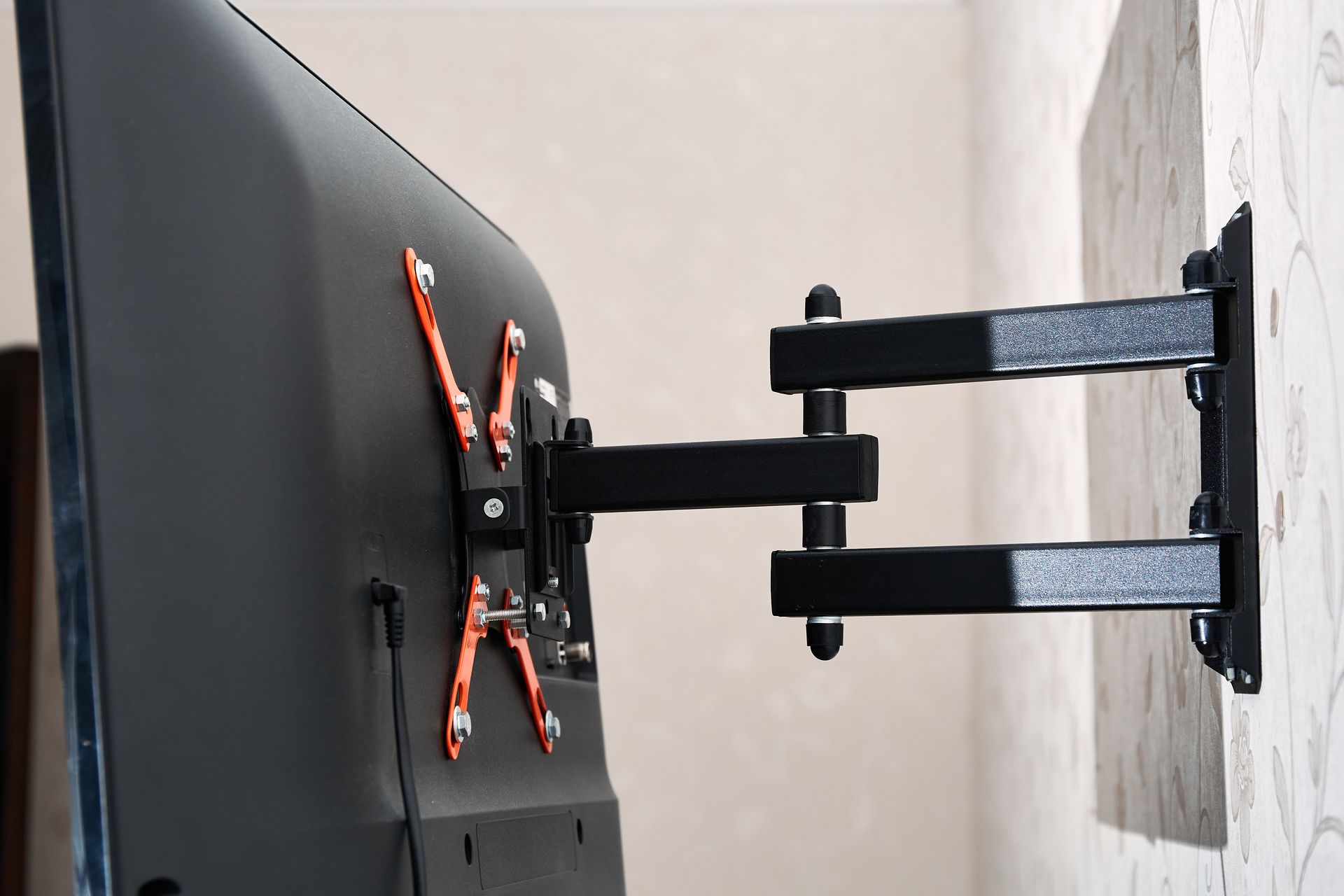
The service includes mount hardware installation, level alignment, and basic cable concealment using existing wall cavities or surface channels. It does not include opening walls for in-wall wiring, installing new electrical outlets behind televisions, or mounting to ceilings. Mount selection depends on your display size and desired adjustability—fixed mounts hold screens flat, while articulating brackets allow tilt and swivel movement.
Answers to Frequent Mounting Questions
Property owners typically ask these questions when planning wall-mounted displays or artwork in mountain homes.
Why use both electronic detection and probe methods for stud location?
Electronic finders work well in newer construction with consistent drywall thickness, but older Arden homes often have plaster, irregular framing, or stone sections that create false density readings. The probe method physically confirms wood framing presence and width before drilling large mounting holes.
What happens if there's no stud where I want the television mounted?
Toggle bolts or snap anchors rated for drywall can support moderate loads between studs, but televisions over 50 pounds require attachment directly to wood framing. Sometimes that means adjusting the planned position by a few inches, or installing a mounting board across multiple studs to create flexibility.
How do you prevent the mount from tilting after installation?
Leveling happens during installation using a torpedo level across the mount bracket, and lag bolts get torqued snug without over-tightening, which can strip threads or crack framing. Once set, the mount doesn't shift unless someone applies force trying to adjust it.
When should I mount artwork versus leaning it on furniture?
Pieces over 20 pounds or anything hung above seating areas should mount to wall framing for safety—leaning heavy mirrors or framed art against walls creates tip-over risk. Smaller decorative items under 10 pounds can use picture hangers on drywall alone.
What's included in basic cable concealment?
Cables can run through existing wall cavities if access points are available near the mount and outlet, or surface channels can hide wires along the wall edge. Running new wiring inside walls or installing outlets requires electrical work beyond basic mounting service.
Handyman Service Arden handles mounting projects with the equipment and backup techniques needed for reliable attachment regardless of wall construction. Schedule your mounting service to review placement options and confirm wall structure before installation day.