
Property Lines That Stay Standing
Fence Repair & Small Installations in Arden for residential properties with failing posts and damaged sections
Posts rot at ground level, rails split from impact or age, and entire fence sections lean after seasonal ground movement pulls footings out of alignment. Handyman Service Arden repairs damaged residential fencing and installs new sections using standard construction techniques proven reliable across typical mountain property applications. The approach focuses on common-sense methods—setting posts in gravel-backfilled holes, fastening rails with galvanized hardware, and replacing boards that split or warp—rather than specialized engineering for extreme conditions. Five decades of building experience means understanding which techniques hold up in Arden soil without overcomplicating straightforward fence work.
Fence repairs often address post rot where wood contacts soil, horizontal rail failure from weather exposure, or picket replacement after storm damage or vehicle impact. Small installations include property line sections, garden enclosures, or standalone gates that don't require surveying or extensive groundwork. Post holes get dug below the frost line typical for this region, gravel provides drainage around the base, and backfill gets tamped in layers to prevent settling that causes leaning over the first year.
Request a property visit to assess current fence damage or discuss installation requirements for new sections.
What Changes After Fence Repairs Finish
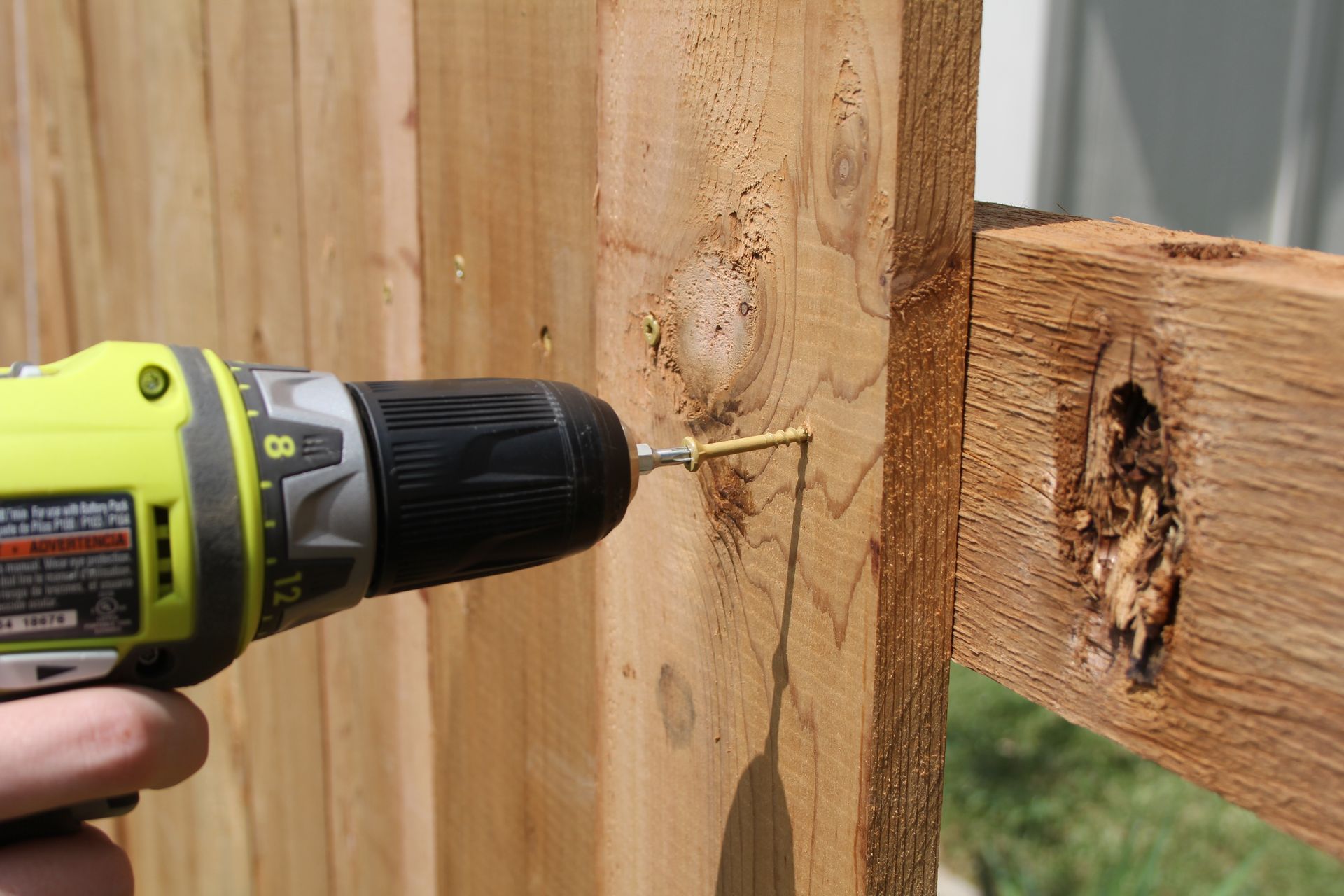
Repairing a fence means removing failed components—cutting out rotted posts at ground level, pulling damaged rails, or replacing split pickets—then installing new lumber secured with corrosion-resistant fasteners. New post installations require digging holes 24 to 30 inches deep depending on soil type, setting posts plumb, and backfilling around them with compacted material that prevents future movement. Arden's clay and rocky soil sometimes requires adjusting hole depth or width when you hit bedrock or large stones, but standard residential applications don't need frost protection engineering beyond typical depth guidelines.
Once repairs finish, fence sections stand plumb without leaning, gates swing freely on properly aligned posts, and new boards match the existing fence line height and spacing. Posts set in well-drained holes resist the rot cycle that destroyed the previous installation, and galvanized or stainless fasteners won't rust through rails in three years like plain steel screws. The fence serves its boundary function without sagging or pulling away from attachment points.
The service covers post replacement, rail and picket repair, small section installations, and gate hardware adjustments. It does not include full perimeter installations over 100 linear feet, decorative ironwork fabrication, or retaining wall integration. Material selection depends on your budget and maintenance preference—pressure-treated pine offers economy, while cedar resists rot naturally at higher cost.
Common Questions About Fence Work
These questions come up when homeowners evaluate fence repair or installation for mountain properties.
What causes fence posts to rot at ground level?
Wood in direct soil contact absorbs moisture, and the freeze-thaw cycle in Arden accelerates decay where posts transition from dry above-ground sections to wet below-ground sections. Pressure-treated lumber resists rot better than untreated wood, but even treated posts eventually fail after 15 to 20 years in constant ground contact.
How deep do fence post holes need to be?
Standard residential practice calls for one-third of the post length underground, with a minimum depth of 24 inches in stable soil—deeper if you're setting corner or gate posts that carry more load. Rocky mountain soil sometimes limits depth, requiring wider holes or concrete backfill for stability.
When should I repair a fence section versus replacing the entire run?
If fewer than half the posts show rot and rails remain solid, targeted repairs extend fence life for several more years. When most posts lean or multiple rails have split, replacing the entire section costs less than piecing together failing components that will need attention again soon.
How long does a typical fence repair take?
Replacing two or three rotted posts with rail reattachment generally takes half a day, while installing a new 20-foot section requires a full day for post setting, rail installation, and picket attachment. Concrete-set posts need additional cure time before attaching rails.
What's the difference between gravel backfill and concrete around posts?
Gravel allows drainage away from the post base, reducing rot risk, while concrete creates a solid column that can trap moisture against the wood. Both methods work for residential applications—gravel suits standard line posts, while concrete provides extra rigidity for gate posts that see repeated stress.
Handyman Service Arden applies 50 years of construction knowledge to fence repairs and installations, using proven techniques without unnecessary complexity. Set up a site evaluation to discuss your fence condition and review repair or installation options.